




Six years ago, we had no idea what would happen next. We wore face shields, reused masks and hoped our hospitals’ capacity would not be overwhelmed. “Zoom” became part of everyday language, and clinicians developed an elaborate mix of hand gestures and handwritten notes just to troubleshoot telehealth visits. Around that same time, we started seeing patients who had technically recovered from COVID-19 but were still exhausted, short of breath, tachycardic or cognitively foggy weeks to months later. At the time, we had few answers beyond reassurance, repeated testing and hoping symptoms would eventually improve.
We now know much more about long COVID, officially called “Post-Acute Sequelae of SARS-CoV-2 infection (PASC),” but treatment options remain frustratingly limited for many patients. Some people recover gradually, while others continue to experience disabling symptoms years later. One major challenge is that long COVID probably represents several overlapping disease patterns rather than a single disease process. Some patients appear to have persistent viral reservoirs, others show evidence of endothelial dysfunction and micro-thrombotic disease, and many seem to have a mix of immune, neurologic and autonomic abnormalities. This overlapping nature is highlighted by the different treatment arm types in one of the largest ongoing studies, the NIH-funded RECOVER-AUTONOMIC trial, a multicenter randomized study evaluating three treatments for PASC-associated postural orthostatic tachycardia syndrome (POTS): coordinated nonpharmacologic care, intravenous immunoglobulin (IVIG) and ivabradine.¹
Several broad symptom clusters are commonly seen in long COVID: respiratory/allergic symptoms, neurologic and gastrointestinal dysfunction, dysautonomia/POTS, systemic inflammation and viral persistence.
Respiratory and allergic symptoms are often related to mast cell activation. Mast cells release histamine and inflammatory mediators that can contribute to dyspnea, flushing, tachycardia, fatigue and GI symptoms. Initial treatment frequently includes H1- and H2-blockers, followed by leukotriene inhibitors such as montelukast and mast cell stabilizers like oral cromolyn when needed. Oral cromolyn is generally preferred over nasal or ophthalmic formulations because many symptoms appear to be driven by mast cell activity within the GI tract itself, and cromolyn works best when in direct contact with the target cells. Many patients are skeptical that over-the-counter antihistamines could significantly help symptoms, yet some patients experience meaningful improvements in fatigue, dyspnea and overall symptom burden.
Neurologic and GI symptoms may involve mitochondrial dysfunction, neuroinflammation, autonomic dysregulation and microbiome disruption. Metformin initially showed promise in reducing long COVID risk, though later studies have been mixed.²˒³ Small studies have also suggested potential benefits from L-arginine and vitamin C, including improvements in fatigue, endothelial function and exercise tolerance.⁴⁻⁶
Urolithin A (UA) has attracted growing interest because of its apparent ability to improve mitochondrial quality control and cellular energy regulation. Produced by gut metabolism of ellagitannins found in foods such as pomegranate, berries and walnuts, UA appears to improve mitochondrial function, reduce oxidative stress and decrease inflammatory signaling.⁷⁻⁹
Autonomic dysfunction, particularly postural orthostatic tachycardia syndrome (POTS), is one of the most common cardiovascular manifestations of long COVID. The 2022 American College of Cardiology (ACC) Expert Consensus recommends a 10-minute active stand test when evaluating orthostatic intolerance after COVID-19.⁴ Diagnostic criteria include a sustained heart rate increase of more than 30 beats/min in adults without orthostatic hypotension, accompanied by symptoms.
Initial treatment usually focuses on nonpharmacologic strategies:
- Increased sodium intake in patients with suspected hypovolemia⁵
- Fluid intake of 2-3 liters daily⁶
- Compression stockings⁶˒⁷
- Avoidance of heat, dehydration, alcohol and large meals⁶˒⁷
- Small, frequent meals and higher-fiber diets to reduce GI pooling and support the microbiome⁶˒⁷
- Screening for ferritin, vitamin B12, thiamine and vitamin D deficiencies⁶˒⁷
- Recumbent or semi-recumbent exercise with gradual progression as tolerated⁶˒⁷
Pharmacologic treatment often begins with beta-blockers such as metoprolol or nadolol. Propranolol is sometimes poorly tolerated because it can worsen fatigue and brain fog. Ivabradine has become an important alternative for patients whose tachycardia persists or whose cognitive symptoms worsen with beta-blockers. Ongoing studies may better clarify its role in long COVID dysautonomia.¹
Systemic inflammation also appears to play a major role in long COVID symptoms. Low-dose naltrexone (LDN) has generated interest because, at low doses, it may reduce neuroinflammation through immune-modulating effects rather than traditional opioid receptor blockade.²¹⁻²³ Because LDN requires compounding, pharmacy quality and consistency matter.²⁴ Microvascular dysfunction and micro-thrombotic disease may also contribute to chronic inflammation and tissue injury in PASC.²⁵
One of the most compelling emerging theories involves viral persistence. Multiple studies have identified SARS-CoV-2 RNA or protein in tissues months to years after acute infection, even after mild illness.⁸⁻¹² Proposed downstream effects include:
- Chronic immune activation and T-cell exhaustion
- Autoimmunity through molecular mimicry
- Endothelial inflammation and microthrombosis
- Gut microbiome disruption
- Neuroimmune dysfunction involving the brainstem and spinal cord
- Reactivation of latent herpesviruses such as Epstein-Barr virus
These findings have pushed researchers toward antiviral-based treatment strategies. Although there is still no FDA-approved treatment for long COVID, several investigational combination therapies are being explored. One of the most discussed is IMC-2 combined with nirmatrelvir-ritonavir (Paxlovid), targeting both SARS-CoV-2 persistence and herpesvirus reactivation.¹³ Other proposed therapies include maraviroc with pravastatin, colchicine, and additional antiviral or immunomodulatory combinations, though evidence quality remains limited.¹⁴⁻¹⁶
Long COVID has had a major impact on healthcare workers, with estimates of 7-18% feeling unable to return to full-time work.²⁶˒²⁷˒³⁴ Under the Americans with Disabilities Act (ADA), long COVID may qualify as a disability, especially when associated with post-exertional malaise (PEM).²⁸ Cardiopulmonary exercise testing (CPET) can objectively demonstrate exertional impairment, but in some patients, it may also provoke severe and prolonged symptom flares and should be undertaken with caution.²⁹˒³⁰
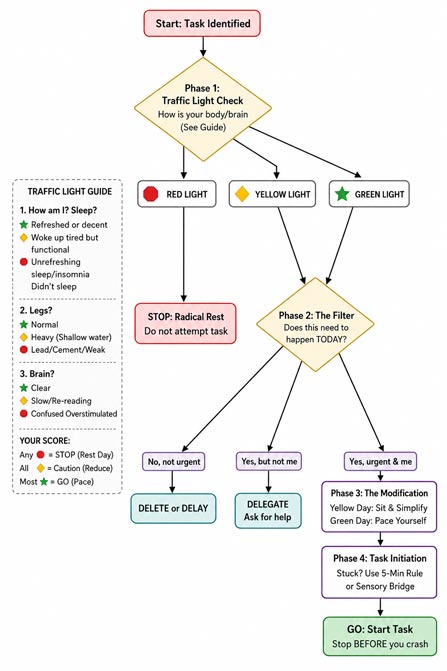
Supportive multidisciplinary care remains essential. Occupational, physical and speech therapy can help patients develop pacing strategies, cognitive adaptations and practical workarounds for daily activities.³¹˒³² Figure 1 shows a useful pacing method for scanning your mental and physical energy when you first wake up in the morning. Importantly, graded exercise therapy is generally discouraged in patients with post-exertional malaise (PEM), as it has been repeatedly proven to worsen symptoms rather than improve them.³²˒³³
We understand far more about long COVID than we did in 2020, but there is still a great deal left to learn. For many clinicians and patients, it remains a frustrating, evolving and deeply human illness — one that continues to challenge many of the assumptions we once had about recovery after viral disease.
References
- Fudim M, Novak P, Taub PR, et al. Design and rationale of RECOVER-AUTONOMIC: A randomized platform trial evaluating interventions for long COVID postural orthostatic tachycardia syndrome. Am Heart J. 2026.
- Bramante CT, Buse JB, Liebovitz DM, et al. Outpatient treatment of COVID-19 and incidence of post-COVID-19 condition over 10 months (COVID-OUT): A multicentre, randomised, quadruple-blind, parallel-group, phase 3 trial. Lancet Infect Dis. 2023.
- Bramante CT, Beckman KB, Mehta T, et al. Favorable antiviral effect of metformin on SARS-CoV-2 viral load in a randomized, placebo-controlled clinical trial of COVID-19. Clin Infect Dis. 2024.
- Izzo C, Vitillo P, Di Pietro P, et al. Combining L-Arginine with vitamin C improves long-COVID symptoms: The LINCOLN Survey. Pharmacol Res. 2022;183:106360. doi:10.1016/j.phrs.2022.106360.
- Tosato M, Calvani R, Picca A, et al. Effects of l-Arginine Plus Vitamin C Supplementation on Physical Performance, Endothelial Function, and Persistent Fatigue in Adults with Long COVID: A Single-Blind Randomized Controlled Trial. Nutrients. 2022;14(23):4984. doi:10.3390/nu14234984.
- Calvani R, Gervasoni J, Picca A, et al. Effects of l-Arginine Plus Vitamin C Supplementation on l-Arginine Metabolism in Adults with Long COVID: Secondary Analysis of a Randomized Clinical Trial. Int J Mol Sci. 2023;24(6):5078. doi:10.3390/ijms24065078.
- D’Amico D, Andreux PA, Valdés P, et al. Impact of the natural compound urolithin A on health, disease, and aging. Trends Mol Med. 2021;27(7):687-699.
- Borsky P, Holmannova D, Soukup O, et al. Distinct roles of urolithin A and spermidine in mitophagy and autophagy: Implications for dietary supplementation. Nutr Res Rev. 2025;38(1):1-15.
- Roussos A, Kitopoulou K, Borbolis F, et al. Urolithin A modulates inter-organellar communication via calcium-dependent mitophagy to promote healthy ageing. Autophagy. 2025;21(2):345-362.
- Qiu J, Chen Y, Zhuo J, et al. Urolithin A promotes mitophagy and suppresses NLRP3 inflammasome activation in lipopolysaccharide-induced BV2 microglial cells and MPTP-induced Parkinson’s disease model. Neuropharmacology. 2022;207:108963.
- Denk D, Singh A, Kasler H, et al. Impact of urolithin A supplementation, a mitophagy activator, on mitochondrial health of immune cells (MitoIMMUNE): A randomized, double-blind, placebo-controlled trial in healthy adults. J Clin Oncol. 2024;42(16 suppl):e24109.
- Sun X, Gao C, Zhang P, et al. Urolithin A protects against calcium oxalate-induced crystal formation and kidney injury by regulating PCK1 to restore mitophagy function in kidney stone disease. Biochim Biophys Acta Mol Basis Dis. 2025;1871(1):167350.
- Yuan H, Xie W, Tan W, et al. Urolithin A from gut metabolite to therapeutic agent: Bioavailability, mechanisms, and translational insights. J Food Sci. 2026;91(3):1120-1138.
- Ryu D, Mouchiroud L, Andreux PA, et al. Urolithin A induces mitophagy and prolongs lifespan in C. elegans and increases muscle function in rodents. Nat Med. 2016;22(8):879-888.
- Piotin A, Oulehri W, Charles AL, et al. Oxidative stress and mitochondria are involved in anaphylaxis and mast cell degranulation: A systematic review. Antioxidants (Basel). 2024;13(2):215.
- Chelombitko MA, Chernyak BV, Fedorov AV, et al. The role played by mitochondria in FcεRI-dependent mast cell activation. Front Immunol. 2020;11:584210.
- Pavlyuchenkova AN, Zinovkin RA, Makievskaya CI, et al. Mitochondria-targeted triphenylphosphonium-based compounds inhibit FcεRI-dependent degranulation of mast cells by preventing mitochondrial dysfunction through Erk1/2. Life Sci. 2022;301:120636.
- Weiler CR, Austen KF, Akin C, et al. AAAAI Mast Cell Disorders Committee Work Group report: Mast cell activation syndrome (MCAS) diagnosis and management. J Allergy Clin Immunol. 2019;144(4):883-896.
- Castells M, Butterfield J. Mast cell activation syndrome and mastocytosis: Initial treatment options and long-term management. J Allergy Clin Immunol Pract. 2019;7(4):1097-1106.
- Yuan H, Xie W, Tan W, et al. Urolithin A from gut metabolite to therapeutic agent: Bioavailability, mechanisms, and translational insights. J Food Sci. 2026;91(3):1120-1138.
- Younger J, Parkitny L, McLain D. The use of low-dose naltrexone (LDN) as a novel anti-inflammatory treatment for chronic pain. Clin Rheumatol. 2014;33(4):451-459. doi:10.1007/s10067-014-2517-2.
- Li X, North RA. Rhythmic membrane potential oscillations induced by opioids in locus coeruleus neurons via toll-like receptor 4 signaling. Proc Natl Acad Sci U S A. 2021;118(1):e2013383118. doi:10.1073/pnas.2013383118.
- Polo O, Tafti M, Merikanto I, et al. Long COVID and the potential role of low-dose naltrexone as a treatment strategy. Front Immunol. 2024;15:1284449. doi:10.3389/fimmu.2024.1284449.
- U.S. Food and Drug Administration. Compounding and the FDA: Questions and answers. FDA Website. Updated 2024. Accessed May 10, 2026.
- Pretorius E, Venter C, Laubscher GJ, et al. Prevalence of symptoms, comorbidities, fibrin amyloid microclots and platelet pathology in individuals with long COVID/post-acute sequelae of COVID-19 (PASC). Cardiovasc Diabetol. 2022;21(1):148. doi:10.1186/s12933-022-01579-5.
- National Academies of Sciences, Engineering, and Medicine. Long-Term Health Effects of COVID-19: Disability and Function Following SARS-CoV-2 Infection. Washington, DC: National Academies Press; 2024.
- Gholami M, Fawad I, Shadan S, et al. COVID-19 and healthcare workers: A systematic review and meta-analysis. Int J Infect Dis. 2021;104:335-346. doi:10.1016/j.ijid.2021.01.013.
- U.S. Department of Health and Human Services, U.S. Department of Justice. Guidance on “Long COVID” as a disability under the ADA, Section 504, and Section 1557. Updated 2024.
- Mancini DM, Brunjes DL, Lala A, et al. Use of cardiopulmonary stress testing for patients with unexplained dyspnea post-coronavirus disease. JACC Heart Fail. 2021;9(12):927-937. doi:10.1016/j.jchf.2021.07.002.
- Davenport TE, Stevens SR, VanNess JM, et al. Checking our blind spots: Current status of research evidence summaries in ME/CFS and post-exertional malaise. Work. 2020;66(2):227-232. doi:10.3233/WOR-203173.
- Bateman Horne Center. Long COVID & Post Viral Illness Rehabilitation Guide. Salt Lake City, UT: Bateman Horne Center; 2024.
- National Institute for Health and Care Excellence (NICE). Myalgic encephalomyelitis (or encephalopathy)/chronic fatigue syndrome: Diagnosis and management (NICE Guideline NG206). London, UK: NICE; 2021.
- Twomey R, DeMars J, Franklin K, et al. Chronic fatigue and post-exertional malaise in people living with long COVID: An observational study. Phys Ther. 2022;102(4):pzac005. doi:10.1093/ptj/pzac005.
- Dempsey B, Madan. I, Stevelink SAM, Lamb D. Long COVID among healthcare workers: a narrative review of definitions, prevalence, symptoms, risk factors and impacts. Br Med Bull. 2024 Aug 25; 151(1):16-35. doi: 10.1093/bmb/ldae008