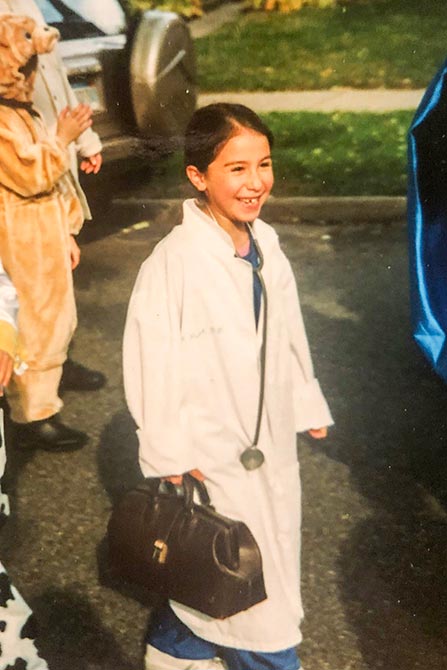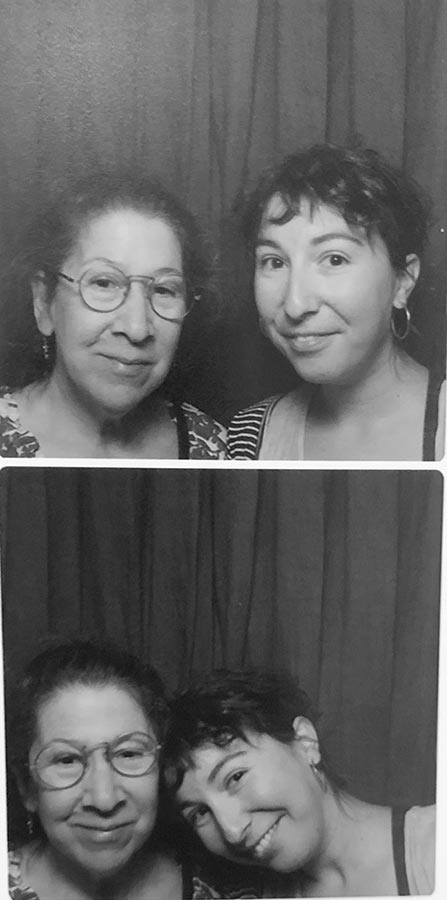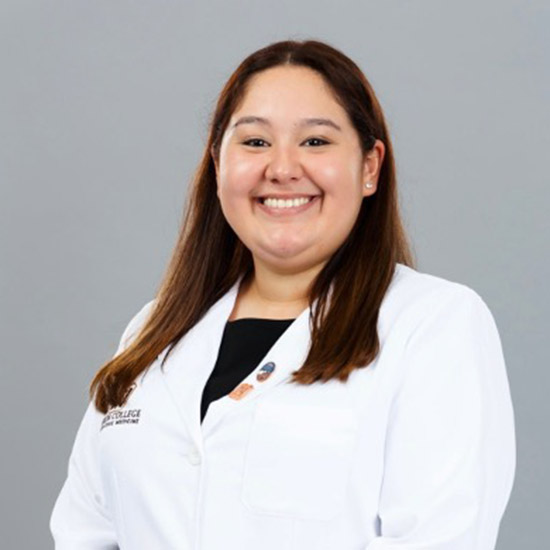



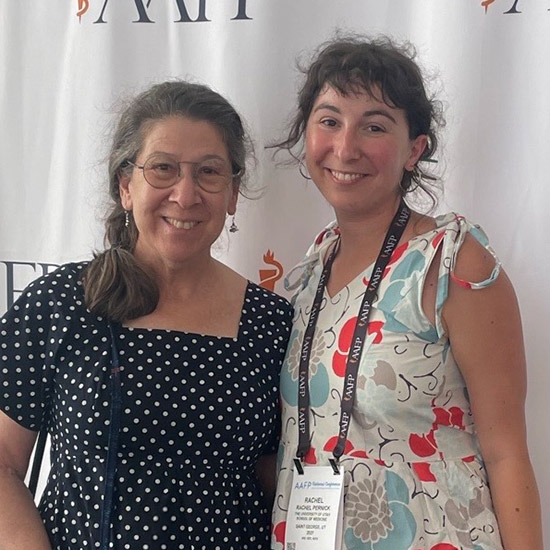
Above: Dr. Rebecca White, formerly Rebecca Pernick, attends FUTURE alongside the future Dr. Rachel Pernick (MS3)
In the summer of 2024, after my first year of medical school, I had the opportunity to attend the AAFP National Conference (now called FUTURE) in Kansas City, Missouri. My mother, originally from Missouri, had just retired from a career in family medicine. So, when I learned I had received a scholarship to travel to Kansas City to attend the conference, I called my mother to see if she might like to come, too, for old time’s sake.
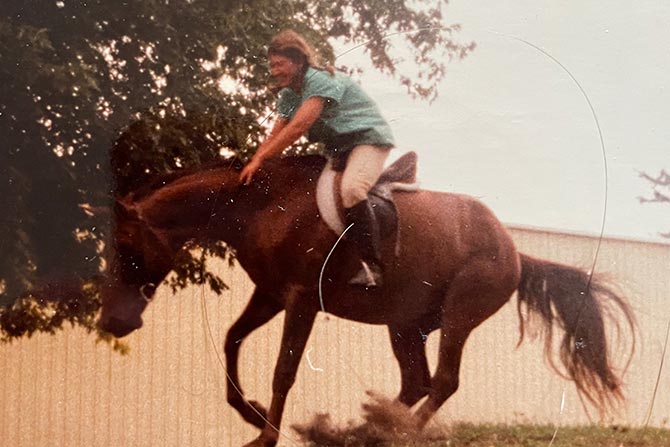
My mother grew up in Columbia, Missouri, two hours east of Kansas City. She moved around a lot. From the time she turned 12 until graduating high school, she attended eight different schools. She eventually moved to Iowa, where she went to college and, later, medical school. She worked part-time through college as a stablehand at a horse stable outside of town. She drove a beat-up pickup truck and pulled a four-horse trailer to horse shows across the Midwest; it never crossed her mind to tell her boss that she didn’t have a driver’s license.
During college, my mother took a job as a ward clerk in the emergency department at the county hospital. There, she recalled working one night when a patient arrived at the ED with a large entourage. He had been performing a concert nearby when a fan threw a live bat onstage, and the patient, thinking it was plastic, bit off the animal’s head. Upon learning that it was, in fact, a live bat which he had just decapitated with his teeth, he was rushed to the county hospital where my mother worked for rabies treatment. The patient was, of course, Ozzy Osbourne.
Stories like these were classics of my childhood, bedtime stories we’d heard so many times we could recite them by heart. For a long time, I imagined that all doctors were like my mother — bringing home canisters of liquid nitrogen to freeze off our warts at the kitchen table, with a drawer full of school pictures of other people’s children, given to her by patients over the years. My mother frequently gave out our home phone number to her patients and kept a landline plugged in next to her bed. I remember her receiving calls in the middle of the night, or during dinner when we had company over, and answering with exquisite patience and care, “Hello, this is Dr. Pernick.” Even as a child, I knew that when my mother left the dinner table to answer the phone, it was for a good reason; one of her patients needed her, and she was the person who knew them best. She was their doctor, after all. In applying to medical school, I craved that same longitudinality that characterized my mother’s decades-long practice.
So that summer at the AAFP National Conference, just hours from where my mother grew up, surrounded by brand-new family doctors and family doctors-to-be, my mother couldn’t help but reflect on her career in family medicine and on how much had changed over the past 40 years. She had only just recently retired, most of her career spent working at a single clinic. She bore witness to demographic change and innovations in medical practice and watched her pediatric patients grow up to become parents themselves. She recalled caring for patients with AIDS-defining illnesses during her residency — how staff would refuse to draw these patients’ blood for fear of contagion and how it was up to the residents to care for these patients as they died, often alone. “They always died,” my mother reflected soberly. “There was no real treatment yet, and everybody died.” Just a few years later, with the arrival of antiretroviral therapy, suddenly, HIV was no longer a death sentence. My mother still remembers the first patient she saw after the advent of AZT. The patient had previously declined testing, but then he became really sick with a lung infection, diarrhea and thrush. He finally agreed to be tested and was quickly started on therapy. Thirty years later, he was still alive: the first of her patients to not die from the virus.
There, in Kansas City, so close to where she grew up, my mother reflected on her long career as a family doctor. She told me about her patients, their children and then their children’s children — sometimes three generations of the same family. Her career epitomized what I thought all doctors did: They came to know their patients, through sickness and through health, from the very beginning until the very end.
The timing of my mother’s career sometimes feels uncanny, as she retired just as I was accepted to medical school. I can’t help but feel that she was handing off the baton to me just as she finished her final lap, one Dr. Pernick making way for another. “It was a good career,” she told me. “It really was … you’ll see.”