


Roots and Early Inspiration
I grew up in New Baltimore, Michigan, on Lake St. Clair, in a family of five children living in the house our mom grew up in. Our family has always been very close, including several generations of extended family, friends and neighbors. Back then, New Baltimore was transitioning from a very rural to a suburban area as the Detroit Metro area expanded north, and to this day, it maintains a small-town feel. People know each other, and no matter how far I have traveled or what I have accomplished, I will always be “Frankie Powers” when I return home.
The Road to Medicine
Both of my parents are healthcare workers: my father, a dentist who built enduring relationships in our town over 40 years, and my mother, a nurse on labor and delivery known for her empathy and clinical expertise. I witnessed firsthand the dedication, purpose and humility inherent in the healthcare profession. While I was encouraged to take any career path, I was inspired to pursue a career in medicine.
I attended De La Salle Collegiate, a high school with a strong foundation in education and service to others. During the summers, I worked in landscape construction alongside Mexican-American men working 70-hour weeks to support their families. I went to Kalamazoo College, a liberal arts college in Michigan, where I majored in biology, ran cross-country, lived in Ecuador for a study abroad, performed research in biochemistry on cytochrome P450 metabolism, created a Spanish interpreter service for the pediatric hematology-oncology clinic and worked at Bell’s Brewery with some eclectic characters.
I considered various career paths in science. Ultimately, my upbringing, my high school education encompassing service to others and my experiences at Kalamazoo College regarding human rights, social justice and diversity solidified my desire to practice medicine. It’s as a way to contribute to community, engage in people’s lives and impact health while treating all people with dignity, respect and compassion.
Finding My Calling in Family Medicine
I attended Michigan State University College of Human Medicine, including clinical training in the Rural Physicians Program in Marquette, located in Michigan’s Upper Peninsula (UP). There, I met my future spouse, Dana. While neither of us is from the UP, we were adopted into it by the generous Yoopers (a self-described affectionate term for inhabitants of the UP) we met. Physicians of every specialty were active members of the community in our rural area.
I considered a variety of specialties other than family medicine, most notably pediatric hematology-oncology and obstetrics and gynecology. I was drawn to the specialty where I could live anywhere, use diagnostic skills broadly, create long-term relationships with patients and adapt my clinical practice to the needs of my community. Going into interview season, I was still undecided between OB/GYN and Family Medicine. Ultimately, it was the family physicians I met here in Utah at my interviews, along with my rotation mentors, that led me to realize I wanted to be a family physician.
From there, I chose residency at St. Mark’s Family Medicine here in Salt Lake City and never looked back (though I still visit Michigan three to four times a year).
Building a Career and a Community
I completed the one-year Family Medicine Obstetrics Fellowship here in Salt Lake City and discovered Community Health Centers (CHC) under the U.S. Health Center program. CHC provides primary and preventive care, behavioral health care and dental care to 34 million people, serving everyone in the area, regardless of background or ability to pay. CHC makes crucial primary care more accessible by reducing barriers such as cost, lack of insurance, distance and language.
In operation since 1978, CHC Inc., which leads the OB fellowship, has built relationships with generations of families in Salt Lake County through physicians/APPs who have dedicated their entire careers to this work. Again, it was the people who solidified my decision to stay in SLC and work at the CHC. At the first provider meeting, the shared clinical knowledge, dedication to quality patient care, integrity and passion were evident, and I knew I had found my people. This was the job I had always wanted, even before I knew it existed.
In terms of area of focus, family physicians are what their community needs. Our group developed a strong pregnancy care program, women’s health and pediatric practice in addition to the preventive care and chronic disease management that are cornerstones of health center work. We broaden our scope as needed by the community, which has included substance use treatment, pandemic response, telehealth and now family medicine residency.
I am faculty in our FM OB Fellowship and for the University of Utah OB/GYN and Family Medicine residencies; a member of GMEC at St. Mark’s Family Medicine; chair of the maternal health committee at Utah Women and Newborns Quality Collaborative; and a past member of the Utah and Wyoming maternal and infant mortality review committee. At the CHC, it is easy to see the impact we have on our community and the health and wellness of our individual patients.
Launching a Residency: Training the Next Generation
We started the CHC Family Medicine Residency to address the workforce shortage in Utah, expand access to care and address the specific needs of medically underserved communities. Having worked at CHC for 15 years now, including during the COVID-19 pandemic, my friends and I have witnessed firsthand the impact of workforce turnover, increased individual workloads and limitations on access to care.
During that time, other Teaching Health Center Graduate Medical Education programs documented the quality of education in health center residency programs in medical journals, including a broader scope of practice, experience in rural (17.9%) and medically underserved areas (35%), and the desire for such programs among graduating medical students. As a group, CHC physicians have been involved with medical education as teaching faculty for students and residents at the University of Utah for over 40 years. This seemed like a natural next step.
But why me? I am simply the representative of a large group of committed individuals and the tradition of medical education at CHC and our partner organizations who created this residency. I have dedicated my time, energy and enthusiasm to bringing this shared vision to life. Personally, the CHC residency allowed me to resolve a career path conflict: pursue a more academic focus in medicine and leave CHC, or remain without an academic focus. I chose a third option: to make a new residency within the CHC.
In addition to my time as program director, I continue a robust clinical practice. The only hesitancy I had in taking on the program director role was relinquishing patient care time, specifically with the patients and families I’ve known for 15 years. I have a clinic two days a week at the Oquirrh View Community Health Center, and I’ve performed 150 deliveries, newborn care and Cesarean Sections for CHC at LDS Hospital and University of Utah Medical Center.
What’s changed for me is that my entire practice now involves medical students and residents in family medicine and OB/GYN. In delving into graduate medical education within the health center, I have taken an active role in workforce development in our state.
The Heart of Family Medicine
In my role creating the residency program, I’ve met people in medical education from across the country, offering plenty of opportunities to reflect on why I chose family medicine. Choosing your specialty is deeply personal, and the “why” might vary among individuals, but one statement to me epitomizes family medicine:
Family medicine constantly challenges and energizes physicians who are comfortable with complexity and thrive on patient relationships at the heart of medicine.
This has certainly been true for me and my career.
Highlights of the Specialty
- Primary care is most patients’ initial interaction with the health care system.
- Primary care physicians must build trust, understand all factors that influence health and apply comprehensive medical expertise to improve their patients’ health and well-being.
- Family physicians’ broad scope of training allows them to engage in a wide range of care for various patient populations regardless of age, gender or health need.
- Family physicians are the only primary care physicians to practice pregnancy care and obstetrics.
- Every person deserves a family physician.
While our specialty is incredibly important and rewarding, we must acknowledge that it also poses significant challenges. But the world needs us, and we need medical students to pursue family medicine. These challenges are opportunities to improve the practice of medicine, healthcare delivery and equitable access to care.
Family First
While I’m proud of my career as a family physician, as a wise friend says, “Your job will never love you back.” Family first.
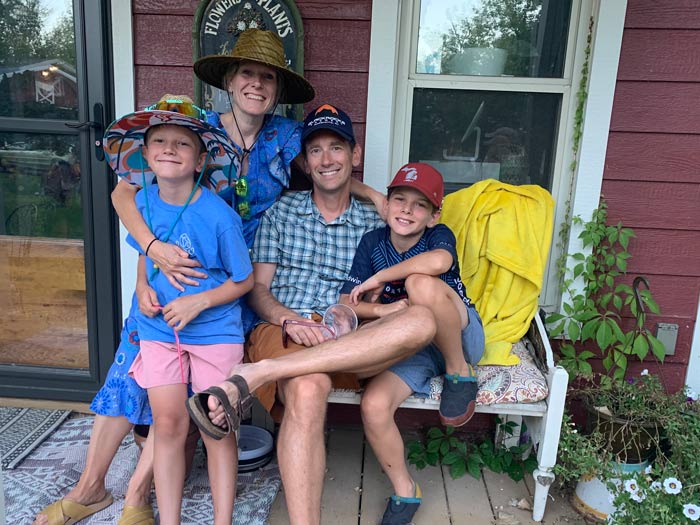
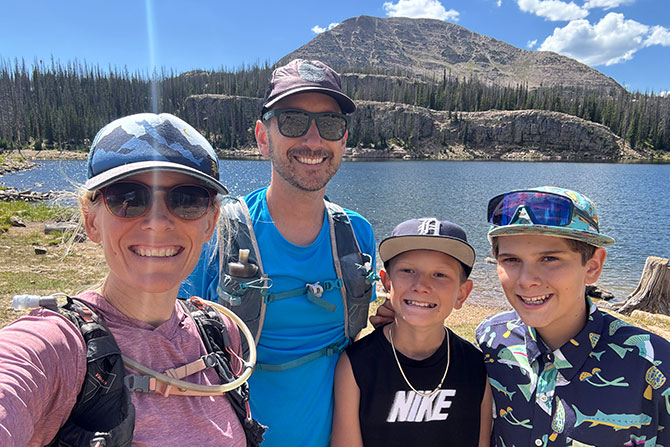
I’m joined on this life journey by my wife, Dana (for 18 years now), our sons Gus (13) and Charlie (10) and our doodle dog Murphy. We enjoy a wide variety of activities with a large network of friends — our Utah family.