



Let’s start from the beginning: tell us a bit about yourself.
I grew up in Woodburn, Indiana, a small town in northeast Indiana just outside of Fort Wayne. I was adopted at a young age and grew up with four other siblings who were also adopted. As a kid, I was often outside climbing trees and playing in the creek with my two older brothers. As an older child and teen, I was very active in sports and played soccer, basketball and ran track nearly year-round. I then stayed in Indiana for college and medical school (nothing beats in-state tuition!). I also studied abroad in New Zealand, which kick-started my love for the mountains, eventually influencing my decision to look out west for residency. Now, I am still quite active and enjoy nearly any activity that involves moving and being outside, like hiking, biking, running and paddleboarding. I still play soccer and have been lucky enough to meet great friends through it. Nearly my entire family is still back in Indiana though, so I fly back as often as my schedule and bank account allow.
Was there a specific moment or experience that solidified your decision to pursue medicine?
I started college as an exploratory studies major (essentially undecided), and we were required to shadow a few professionals as part of the program. I ended up shadowing a family medicine doctor who was a family doctor in Eastern Europe and then came over here and repeated everything (exams, residency) to practice in the U.S. I was so impressed with her quick thinking, her relationships with her community and how many people’s stories she could witness and play a positive role in. Plus, if she could do all that is required to be a doctor twice, I could certainly do it once.
In addition, I was adopted by my mom when she was much older than my friends’ parents, so I was frequently exposed to medicine from the patient side as she aged and accumulated health problems. In the end, the trust and respect she shared with her family doctor played a significant role in my decision to commit to family medicine.
You had a pretty diverse gap year, working in a restaurant, a brewery and a direct primary care clinic. How did those experiences shape your perspective on medicine and patient care?
It’s funny; I often think about how my service jobs have prepared me for primary care more than any medical job I’ve had. In both primary care and the service industry, you come face-to-face with all different members of the community and are tasked with helping them. Efficiency is a priority, and both jobs can feel like a grind as you manage multiple tasks at a time. Primary care just changes the subject from food and drink to deeper health issues and challenges.
For my work in the direct primary care clinic, I was exposed to a different model of medicine that took out the middleman of insurance. Each patient paid around $50/month to get access to primary care, which broke down barriers to healthcare for many patients. Working in this model showed me there are solutions to the systemic issues in healthcare; they just sometimes require stepping outside of the norm.
Among your interests — policy, behavioral health, women’s health — where do you see the biggest opportunity for impact right now? How do you see policy and advocacy fitting into your future career as a physician?
I do see policy as the place to make a larger, lasting impact. Legislation can have sweeping, immediate effects on patients, so catching when helpful or harmful legislation is proposed and then supporting or opposing it feels especially important. In addition, there are many pieces of legislation that affect us and our patients but lack healthcare worker representation. Furthermore, I think engaging and educating patients to help change systemic issues that lead to lower quality care — like short appointment times and physician shortages — is an underutilized area of advocacy. I always find it so disheartening when patient dissatisfaction is turned towards healthcare workers when systemic issues are at the core of the issue.
For my career, I imagine being more of a loyal, behind-the-scenes advocate through educating others on our healthcare system, supporting or opposing legislation during legislative sessions, and organizing the community around specific causes like increasing healthcare access. I will also have the chance to explore more about what advocacy in my career could look like, especially at a national level, during a one-month-long program focused on health policy in D.C. this summer.
What ultimately made the University of Utah stand out compared to other programs you considered?
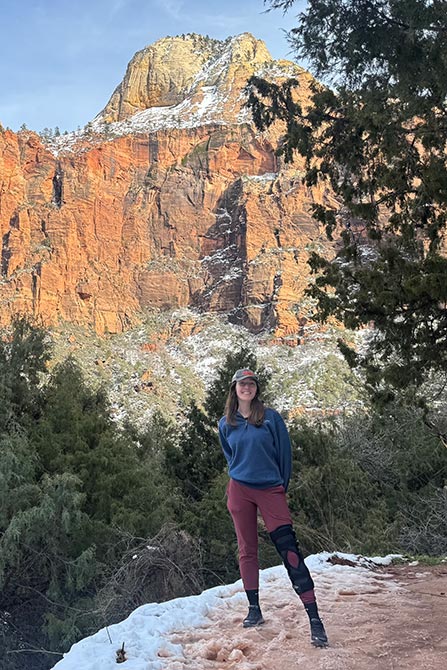
It felt like this program had the ideal mix of great learning and an appreciation for life outside of medicine. I knew being active was going to be a huge part of getting through the grind of residency, and I wanted a place that would give me that. I also imagined myself getting away from the bleak Midwest winters and learning to enjoy winter by learning to snowboard. I’ve now spent two winters out here and have yet to learn — it turns out breaking your wrist and rupturing your ACL are two great ways of keeping you off the slopes. Regardless, I’ve enjoyed this program and my time in Utah immensely and, in fact, am planning on staying in the area after graduation.
What advice would you give to medical students or applicants who share your interest in health equity?
Don’t let it go. This career path can be very busy and does not naturally lend time for advocacy. Keep having conversations about the topics that impassion you, even if you are the only one to initiate them. Continue to seek out opportunities and groups that also want to move the field of healthcare forward. I promise you won’t regret it when you find that community of people who care deeply about the same issues you do.
You enjoy exploring breweries and coffee shops. Have you found any favorites in Utah so far?
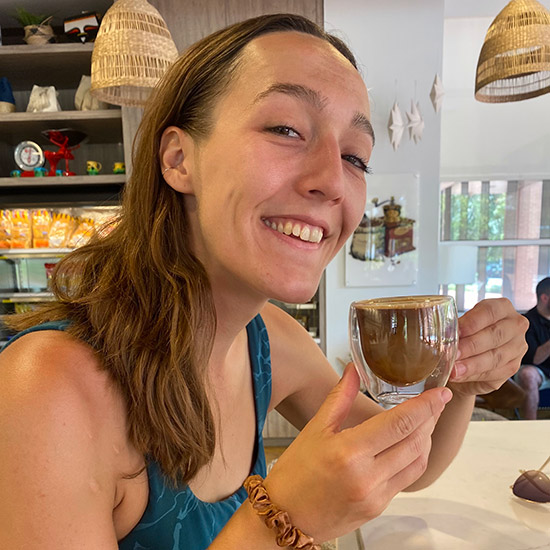
Yes! I live in the Aves, so I frequent the neighborhood Publik often for a cappuccino. For breweries, I often find myself at Fisher or TF like many of my fellow Salt Lakers. There’s just something special about a good, relaxing patio coffee or beer, and all three of those places really hit the mark.